
When Curiosity Becomes Art: How BridgeUSA Helped Bring Discofoot to the United States
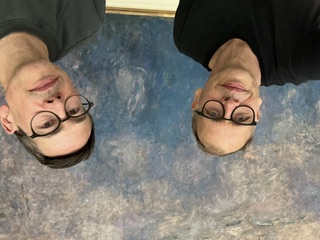
For more than four decades, Swedish choreographer Petter Jacobsson has explored what dance can become.
As a dancer, choreographer, and artistic director—including leadership roles with the Royal Swedish Ballet and Centre Chorégraphique National – Ballet de Lorraine—he has worked across ballet, contemporary dance, opera, and performance. Throughout his evolving career, one quality has continually guided him: curiosity.
"I'm a very curious person, and that curiosity has always driven me. I've always gone, 'Okay, now what's next?'" —Petter Jacobsson
One answer to that question became Discofoot—an unexpected collision of soccer, contemporary dance, disco music, improvisation, and artistic competition.
Most people do not expect a soccer match to look like contemporary dance. Yet that is exactly what audiences experienced when Discofoot made its U.S. premiere in West Hollywood.
Equal parts sport, dance, and performance art, Discofoot invites audiences to reconsider competition, collaboration, and even what defines a game. But for Jacobsson, the work was never simply about combining soccer and dance. It emerged from years of experimentation and a persistent interest in how art can connect people in new and unexpected ways.
“Never underestimate an audience,” he said. “Maybe you didn’t know you liked this.”
From Soccer Field to Dance Floor
The idea for Discofoot began in Nancy, France, where Jacobsson and his longtime artistic partner and co-creator, Thomas Caley, lived across from a public park.
As they watched people play sports, they became fascinated by the way soccer players moved across an entire field—the precision of their footwork, their awareness of space, and their constant response to one another.
That observation led to a deceptively simple question:
What if the players danced instead of ran?
Jacobsson and Caley began experimenting with different movement styles before eventually turning to disco—a form associated with freedom, individuality, and the simple pleasure of moving.
From there, the rules took shape. The performers could not run; they had to dance. Each player still had a position, but every movement responded to the ball, the opposing team, and the dancers’ own teammates.
“The ball actually makes the choreography,” Jacobsson explained. “When the ball goes to a certain part of the field, that creates a whole dynamic of the field and everyone else.”
"The ball actually makes the choreography." —Petter Jacobsson
The dancers must score goals while remaining committed to the movement. Artistic judges assess their creativity and expression, meaning a team can win by dancing better—even if it scores fewer goals.
Because every pass changes the movement across the field, no two performances are ever exactly alike.
Although Discofoot appears playful and spontaneous, it requires discipline, trust, and constant awareness.
“You have to constantly be really tuned into what’s going on,” Jacobsson said. “If you lose it, that’s the discipline—that’s the work—get back in there again.”
Typically performed outdoors and offered free of charge, Discofoot reaches audiences who may not ordinarily attend a contemporary dance performance. Some arrive intentionally. Others stop because they are trying to understand what they are seeing.
The performance welcomes people who love soccer, people who love dance, and people who may feel connected to neither. Its playfulness makes the work approachable while quietly encouraging audiences to see familiar ideas from a different perspective.
When asked to complete the sentence “Art has the power to…,” Jacobsson answered simply:
“To shake things around.”
"Art has the power to shake things around." —Petter Jacobsson

Bringing Discofoot to the United States
Discofoot made its U.S. premiere after representatives from the City of West Hollywood discovered the performance online and pursued the opportunity to bring it to California.
Jacobsson traveled to the United States through the U.S. Department of State’s BridgeUSA Specialist Program, with the City of West Hollywood serving as his host organization and Cenet as his program sponsor. The six-week project brought him together with American dancers who had never worked with him—or, in many cases, with one another—before.
The casting process focused not only on technical ability, but also on openness, adaptability, individuality, and a willingness to explore.
“We have to find artists that are really open-minded,” Jacobsson said. “There are lots of artists who are fantastic dancers, but they’re good at one thing, and that’s not going to work here.”
Jacobsson wanted dancers with different ages, abilities, movement qualities, and artistic perspectives.
“We don’t want everybody to be the same,” he said.
The American dancers quickly embraced the collaborative process. They were asked to absorb a large amount of material in a short period, understand the game, develop trust, and find their own voices within Discofoot’s shared structure.
“We set up high demands,” Jacobsson said. “We asked them to learn a lot in a very short time—and they did.”

A Mutual Cultural Exchange
For Jacobsson, bringing Discofoot to the United States was not simply a matter of presenting an established European work to an American audience.
The American dancers shaped the production through their own movement, energy, perspectives, and ways of working together.
“In all the different countries, there’s a different flavor,” he said. “You come to a new country. What’s the energy there? What’s going on? How can we use this in a fun way, in a creative way?”
"In all the different countries, there's a different flavor. What's the energy there? How can we use this in a creative way?" —Petter Jacobsson
The basic structure of Discofoot remains consistent, but every new group of performers contributes something that could not be replicated elsewhere. The U.S. production became its own expression of the work—created through collaboration between an international artist and American dancers.
The exchange also extended beyond the rehearsal room.
Living in Los Angeles for six weeks allowed Jacobsson to experience the community through the rhythms of everyday life. He walked through the neighborhood, shopped, cooked, worked with local artists, and learned more about how freelance dancers in the United States build their careers.
“We were there. We were living there. We were experiencing what everyone else was experiencing,” he said. “You become a little bit part of the everyday life there.”
When reflecting on the experience, Jacobsson returned to the feeling of being welcomed by the dancers and the community.
“That feeling is fantastic,” he said. “To be able to feel welcome when you are in a new place.”
That sense of mutual appreciation reflects what cultural exchange can make possible. Jacobsson brought years of artistic knowledge, and a performance developed through sustained experimentation. In return, the American artists brought their own creativity and perspectives, shaping Discofoot in ways unique to its U.S. premiere.
BridgeUSA provided the framework that allowed those relationships to form.
“Without you and all the other collaborators, it wouldn’t have happened,” Jacobsson said of Cenet and the partners who helped make the exchange possible.
He described the Specialist Program as “a really nice way to do this kind of exchange”—one that allows international artists and experts not only to work in the United States, but also to contribute to American communities while learning from the people they meet.

The Lasting Impact of Exchange
The West Hollywood performances introduced Discofoot to new artists and audiences, attracted national attention, including coverage from The New York Times, and created possibilities for future collaboration.
Still, the most lasting result may be the relationships formed through the experience.
“I hope, in the future, it would be wonderful if this could happen again—if we could have a collaboration between us again,” Jacobsson said.
Discofoot began with questions about movement, audiences, sport, and what might happen if familiar rules were rearranged.
Through BridgeUSA, those questions became a cultural exchange—bringing an international artist and American performers together to listen, experiment, learn from one another, and create something that could not have existed in quite the same way anywhere else.
Curiosity gave Petter Jacobsson a new way to see movement.
BridgeUSA gave that curiosity a chance to cross an ocean.
The connections it created may last far longer than the performance itself.
